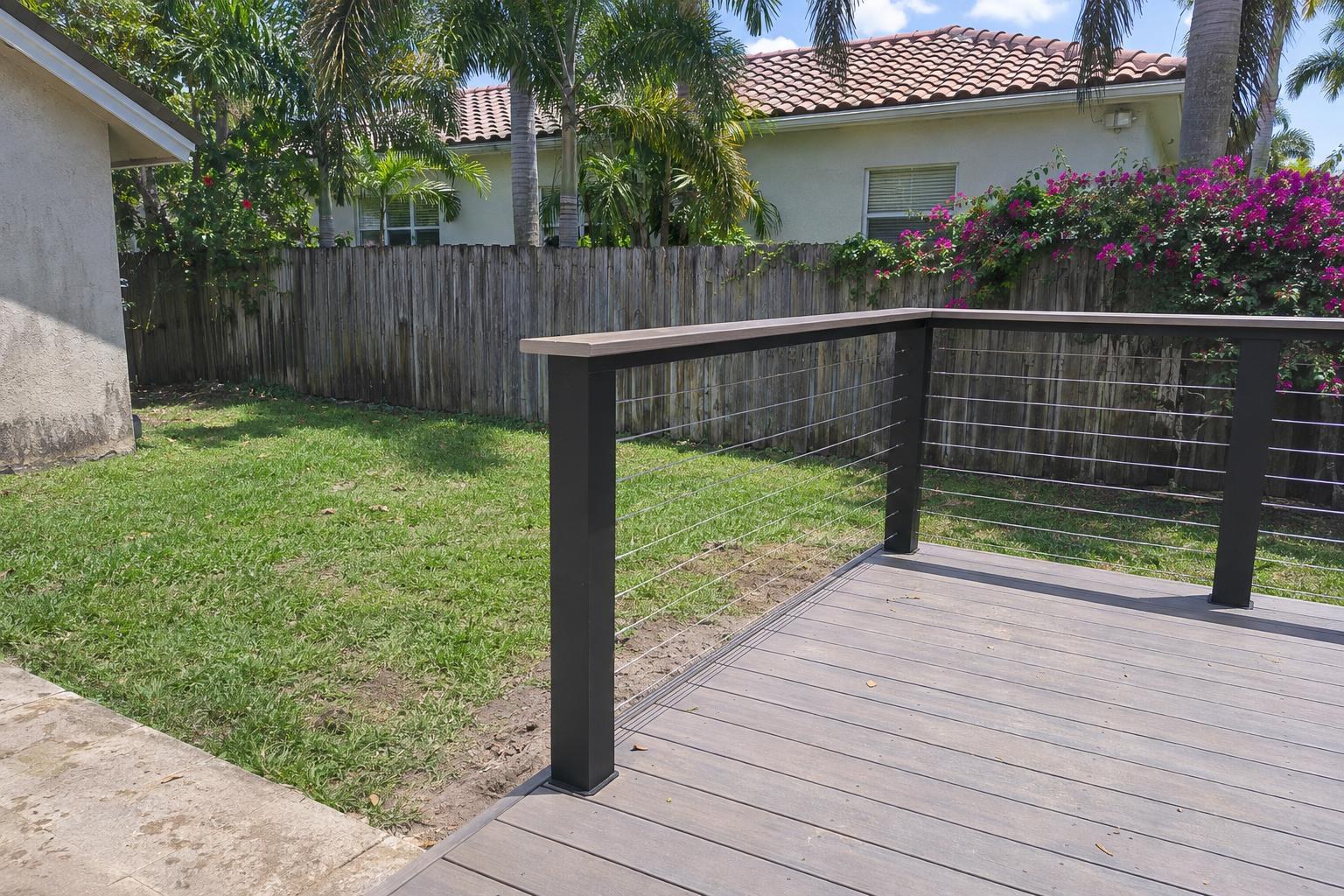
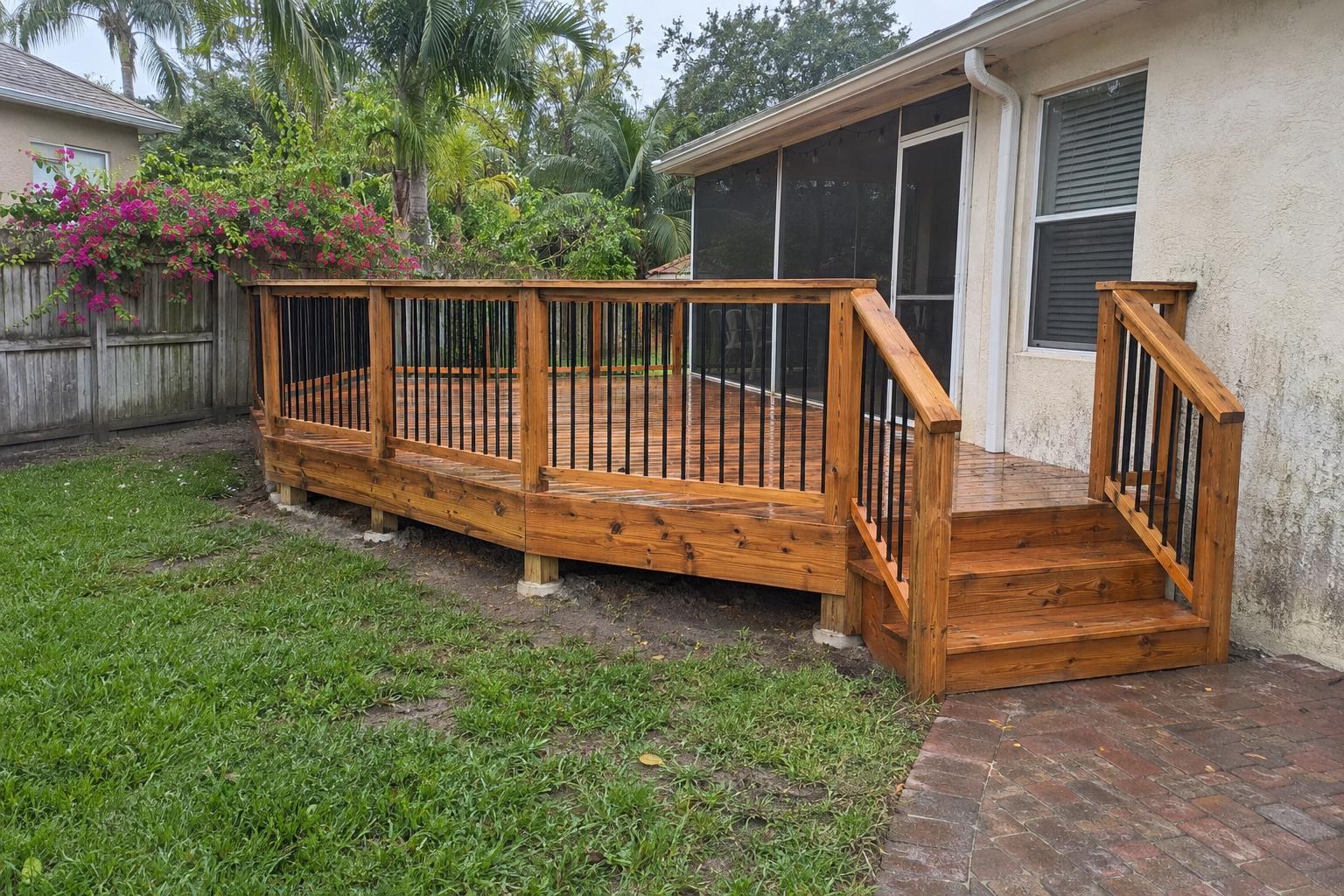
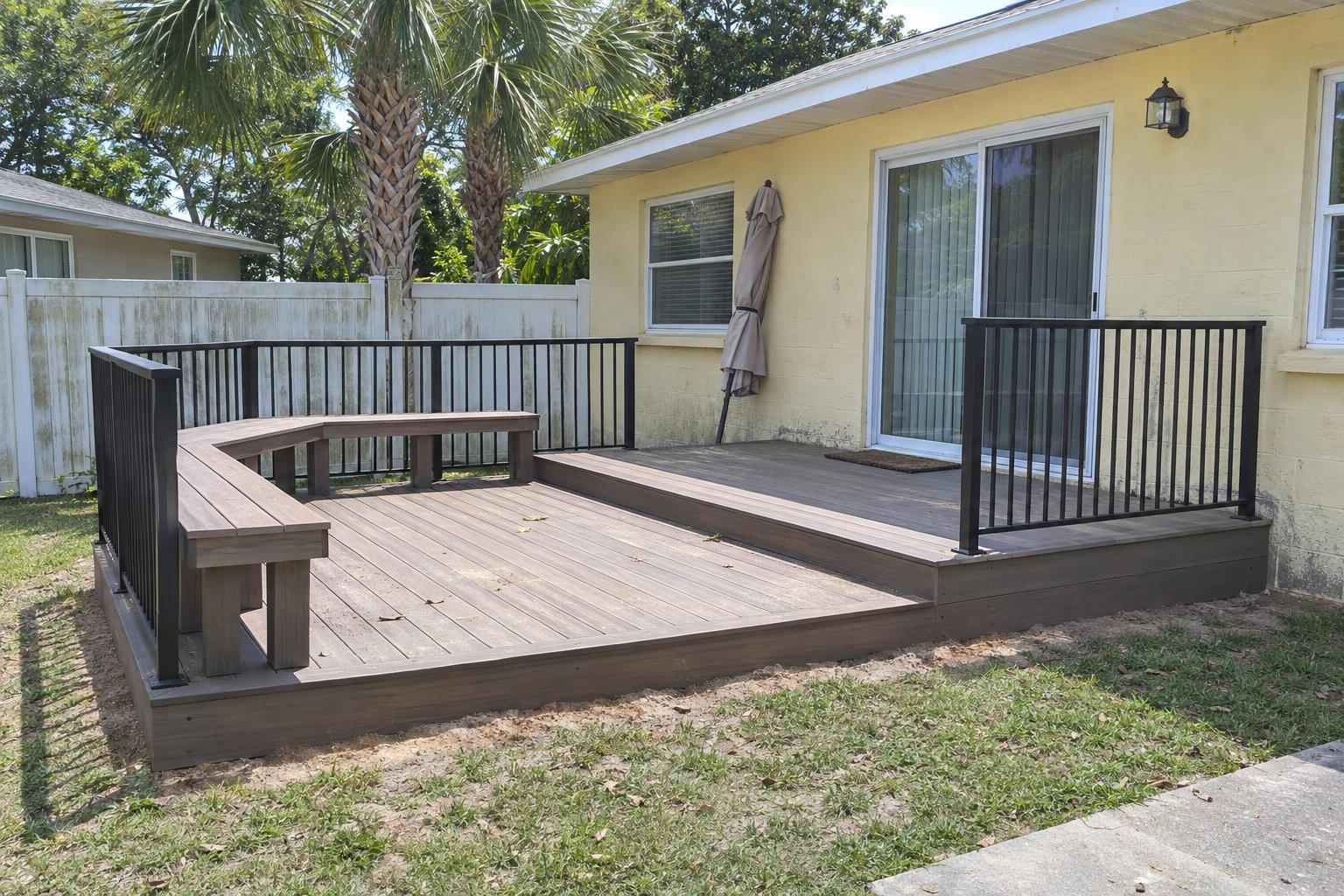
Every job below is one we do ourselves across Punta Gorda.
Framing in pressure-treated southern yellow pine, joists set to the span table for your decking material, footings poured below grade for stability. Ledger boards get bolted and flashed to the house, not just nailed, since that connection is where most deck failures start.
Trex and TimberTech go down over a standard pressure-treated frame, using hidden fastener clips instead of face screws for a cleaner look. Composite costs more upfront than wood but doesn't need re-staining and holds up better to Florida humidity.
Soft spots, popped nails, a ledger board separating from the house wall, or a railing that's gone loose. We pull the damaged section, check the joists underneath for rot or termite damage, and repair what's actually failing instead of just covering it.
Pressure wash first, strip any failing old finish, then let the wood dry out for a couple of days before sealing. A UV-rated sealer holds up better against Florida sun than a basic clear coat, especially on a south-facing deck.
Multi-level layouts, decks built around an existing pool or oak tree, picture-framed border boards, built-in bench seating along a rail line. Layout decisions get made before the first footing goes in, since changing direction mid-build costs more than planning it up front.
Florida code sets a minimum rail height and a baluster spacing that passes the 4-inch sphere test, and we build to that regardless of material. Aluminum, wood and cable rail all have different post spacing requirements, which affects how the frame underneath gets built.
Decking built around an existing pool cage, graded so water drains away from the house instead of pooling against it. Non-slip composite boards are the common choice here since bare feet and wet surfaces don't mix well with standard wood.
Spot-replacing cupped, split or splintering boards without tearing out the whole deck. Matching the color of weathered wood or composite takes some judgment, and we'll tell you up front if a few new boards are going to stand out.
Extending a deck into a screened lanai, which usually means a heavier footing schedule to carry roof load and tying new framing into the existing roofline. This is a bigger job than standard decking and runs on its own permit and inspection.
Tearing out an old wood deck before a rebuild, hauling off the scrap lumber, and checking whether existing footings are sound enough to reuse. Reusing good footings saves money, but a lot of older decks in this area were never poured deep enough to begin with.
Four steps, and no surprises in any of them.
You tell us what you want doing, we look at what is actually there, and we ask the awkward questions early.
In writing, itemised, free. If something might add cost later we flag it now rather than at the end.
Same crew throughout. We cover your floors, keep the dust down and tidy up before we leave each day.
You point out anything you are not happy with and we fix it before the invoice, not after.
Deck installation and repair work covers Charlotte County and beyond.
Questions that come up once a deck project is underway.
Describe the problem and we will tell you what it probably is. No obligation.